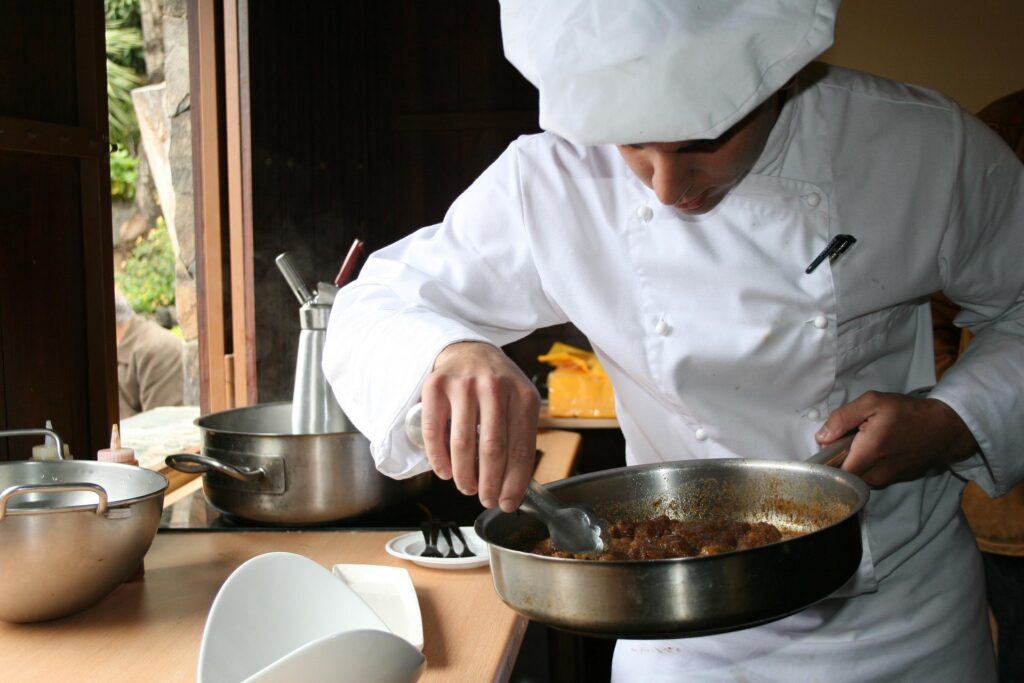
One of the easiest ways to understand Gran Canaria a little better is through its food. Canarian cooking is generally uncomplicated, filling and built around ingredients that have suited island life for generations: potatoes, fish, meat, cheese, pulses, vegetables and the ever-present mojo sauces.
You do not need to spend your entire holiday searching for traditional restaurants, but I would make a point of trying at least a few genuinely Canarian dishes while you are in Las Palmas. They provide a welcome contrast to the international restaurants found throughout the city.
Start with papas arrugadas and mojo
The obvious introduction is papas arrugadas: small potatoes traditionally cooked in heavily salted water until the skins become wrinkled. They are usually served with mojo and often appear as a side dish or something to share.
The two sauces you will see most frequently are mojo rojo and mojo verde. Red mojo commonly contains peppers, garlic and spices, while the green version often gets its colour and freshness from coriander or parsley. Recipes differ from restaurant to restaurant, which is part of the fun. After a few meals you may find yourself developing a definite preference.
Fresh fish and simple cooking
Being on an island, it is hardly surprising that fish has an important place in Canarian cuisine. Look beyond generic tourist menus and you may find locally popular fish prepared simply – grilled, fried or served with potatoes, salad and mojo.
I would ask what fish is available rather than arriving determined to order one particular species. A straightforward plate of fish with Canarian potatoes can be more memorable than something much more elaborate.
Gofio – a taste of Canarian history
Gofio is one of the ingredients that makes Canarian food distinctive. Made from roasted grain ground into flour, it has been part of the islands’ diet for centuries. Visitors sometimes expect it to be one specific dish, but gofio can appear in many different forms.
You might encounter it mixed into savoury preparations, served as gofio escaldado with stock, or used in sweets and desserts. Its roasted flavour can take a little getting used to, but it is worth trying precisely because it is so closely associated with the Canary Islands.
Cheese from Gran Canaria
Do not overlook the cheese. Gran Canaria has a strong cheesemaking tradition, and local cheeses range from mild to much more characterful mature varieties. They may appear as a starter, simply sliced, grilled or accompanied by mojo or something sweet.
If you see a selection of Canarian cheeses on a menu, sharing a plate is an easy way to sample several without committing to one large portion.
More dishes worth looking for
Traditional menus can also include hearty stews and soups. Ropa vieja in the Canary Islands is typically a substantial mixture involving chickpeas, potatoes and meat, while potaje refers to the kind of comforting vegetable and pulse-based stew that feels far removed from the image of beachside holiday food.
Meat dishes are also part of the local repertoire, including preparations with pork, goat or rabbit. You certainly do not need to try everything; the point is to look beyond the handful of dishes that appear on every tourist menu.
Where should you eat Canarian food in Las Palmas?
Vegueta is a good area to combine sightseeing with a traditional meal, and you will also find interesting restaurants in Triana and residential neighbourhoods away from the main visitor routes. Around Las Canteras there are plenty of choices, but I would occasionally walk away from the beachfront and explore the streets behind it.
Markets can also help you understand the ingredients before you encounter them on a restaurant plate. Seeing local cheeses, fruit, vegetables and fish makes Canarian cooking feel less like a list of dishes and more connected to the island itself.
My suggestion for a first Canarian meal
Keep it simple. Share some papas arrugadas with mojo, choose a local cheese or another starter and then order fish or a traditional main course. If gofio appears somewhere on the menu, try it at least once.
Canarian cuisine is not about elaborate presentation. At its best, it is generous, distinctive and strongly connected to the islands. And once you have spent a few days in Las Palmas, the smell of mojo, grilled fish and salty potatoes may become as much a part of the trip as Las Canteras or the streets of Vegueta.