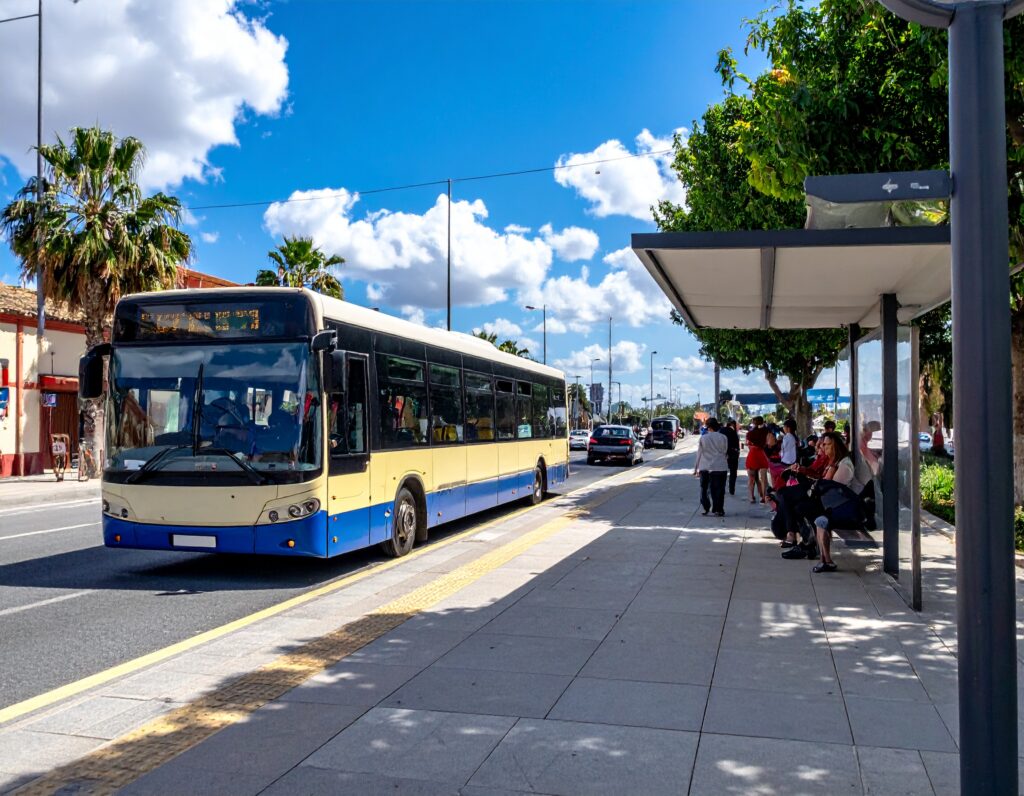
Public transport in Las Palmas can look slightly confusing at first because two different bus companies are important to visitors. Once you understand the difference, however, getting around without a car is surprisingly easy.
In the Canary Islands, buses are normally called guaguas. In Las Palmas you will see two names again and again: Guaguas Municipales, which operates the city bus network, and Global, which connects Las Palmas with destinations across Gran Canaria.
The simplest rule is this: if you are travelling around Las Palmas itself, start with Guaguas Municipales. If you want to leave the city and explore the island, Global is usually the company you need.
Guaguas Municipales – buses within Las Palmas
The bright yellow buses of Guaguas Municipales are part of everyday life in the capital. The network reaches neighbourhoods well beyond the areas most tourists normally walk through and can save a surprising amount of time when you want to cross the city.
Visitors staying around Las Canteras may find that walking is enough for many days, but a city bus becomes useful for reaching places farther south or inland, or simply when you do not want to walk the full distance between different parts of Las Palmas.
Do not worry about memorising the entire network. Check the route you need for that particular journey and confirm the direction before boarding. Routes and stops can change, so current information from Guaguas Municipales is more useful than an old printed guide.
Global – buses around Gran Canaria
Global operates the intercity network that links Las Palmas with towns, villages, the airport and many of Gran Canaria’s main visitor destinations. These buses make it perfectly realistic to see more of the island without renting a car.
Depending on the route, you can use Global for journeys towards places such as Telde, the airport, the south coast, Puerto de Mogán, Santa Brígida and destinations in the north of Gran Canaria.
The important difference is that Global is not simply another city bus company. Think of it as the network you use when Las Palmas is your base but your destination is somewhere else on the island.
Santa Catalina bus station
Intercambiador de Santa Catalina is the most convenient major transport hub for many visitors. It is close to Parque Santa Catalina, the port area and Las Canteras, so if your hotel or apartment is near the beach this is often the station you will use first.
Both city and intercity connections can be found around Santa Catalina. Several Global routes begin or pass here, while Guaguas Municipales routes also serve the interchange and surrounding streets.
If you are staying near Las Canteras, I would learn where Santa Catalina is on your first day. Even if you mostly walk around the city, it becomes a useful reference point for airport transfers and excursions farther across Gran Canaria.
San Telmo bus station
Estación de San Telmo is the other major bus station visitors should know. It lies much farther south in central Las Palmas, beside Parque San Telmo and close to the Triana shopping district. Vegueta is also within easy walking distance.
San Telmo is particularly important for Global services, with numerous intercity routes using the station. If you are staying around Vegueta or Triana, it will often be more convenient than travelling north to Santa Catalina before beginning your journey.
The two stations also make the geography of Las Palmas easier to understand: Santa Catalina is the natural hub for Las Canteras and the northern visitor areas, while San Telmo serves the historic and commercial districts farther south.
Which station should you use?
Do not automatically assume that every Global bus leaves from both stations. Some services use San Telmo, some Santa Catalina, and others serve both. Check your specific route before setting out.
For example, Global services can run from Santa Catalina through San Telmo before continuing elsewhere on the island, while other routes originate at San Telmo. Knowing which station is most convenient can save an unnecessary journey across the city.
Using buses for day trips
One advantage of staying in Las Palmas is that the bus network opens up a surprisingly large part of Gran Canaria. You can plan simple day trips without worrying about parking or mountain driving, and the journey itself often gives you a better view of everyday life outside the tourist areas.
For straightforward destinations on established routes, I would happily choose Global over hiring a car. A car becomes more valuable when you want to visit several remote places in one day or explore areas where connections are less convenient.
A few practical tips
Check the operator as well as the route number before travelling. A yellow Guaguas Municipales bus and a Global bus belong to different networks, even though everyone will casually refer to both as guaguas.
Allow a little extra time the first time you use San Telmo or Santa Catalina, especially when catching an intercity service. Find the correct departure area before buying a coffee or wandering off to explore.
Most importantly, check current routes, fares and timetables with the operator before a journey that matters. Public transport information changes, and missing the last useful connection back to Las Palmas is a poor way to finish an otherwise excellent day trip.
Do you need a car in Las Palmas?
For many visitors, no. Between walking, Guaguas Municipales and Global, you can build an entire Las Palmas holiday without driving. Stay near Las Canteras, Santa Catalina, Triana or Vegueta and much of the city is accessible on foot, while buses fill the gaps.
That is one of the capital’s advantages as a base for Gran Canaria. You can enjoy a genuinely urban holiday, make day trips across the island and only rent a car for the days when it actually gives you something the buses cannot.
Routes, fares and timetables can change. Check current information from Guaguas Municipales or Global before travelling.