From ancient island cultures to Christopher Columbus and the age of Atlantic exploration, discover the fascinating history of Gran Canaria in the historic heart of Las Palmas.
Las Palmas de Gran Canaria is a wonderful destination for visitors who enjoy history, architecture and discovering the stories behind the places they visit.
Founded in 1478, the city has developed from a small Castilian settlement into one of the most important ports in the Atlantic. Today, its historic neighbourhoods, museums and beautiful buildings offer fascinating insights into the island’s past.
Explore the Historic Streets of Vegueta
The best place to begin your historical journey is Vegueta, the oldest neighbourhood in Las Palmas.
Wander through its narrow streets and discover beautiful examples of traditional Canarian architecture, historic squares and impressive buildings.
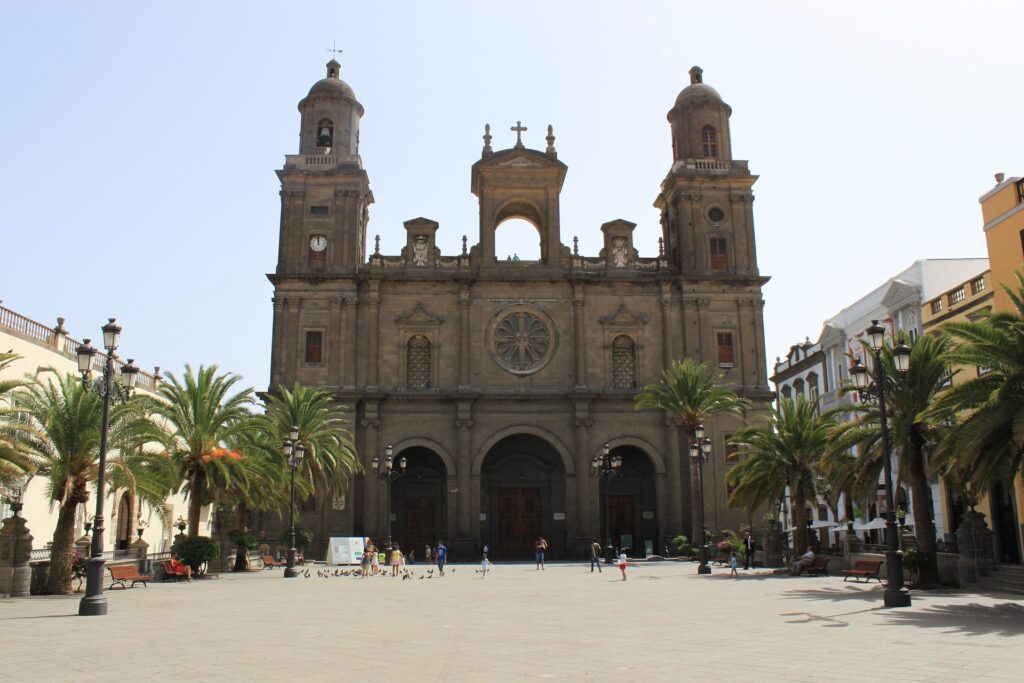
Visit Santa Ana Cathedral, whose construction began in the late 15th century, and explore the surrounding Plaza de Santa Ana.
The nearby Casa de Colón museum provides an interesting introduction to Christopher Columbus and the Canary Islands’ role in Atlantic exploration.
Discover the Island’s Ancient Heritage
Long before the arrival of the Spanish, Gran Canaria was inhabited by Indigenous Canarian communities with their own traditions, settlements and cultural practices.
Visit the Museo Canario in Vegueta to discover archaeological collections that provide insights into the lives of the island’s earliest inhabitants.
The museum offers an opportunity to learn about Gran Canaria’s history before the Castilian conquest.
Experience Centuries of Maritime History
Las Palmas developed into an important Atlantic trading port, connecting Europe, Africa and the Americas.
Explore the historic harbour areas and discover how maritime trade, migration and cultural exchange influenced the city’s development.
My tip: Spend a morning exploring Vegueta, combining Santa Ana Cathedral, Casa de Colón and the Museo Canario. These attractions are located within a short walking distance of one another, making it easy to discover several fascinating chapters of Canarian history in a single visit.